

Get your education news from the United Kingdom
Provided by AGP
CodeLifeAI Founder Dr. Keith Wai-Yeung Kwong Honoured at the 2025 Forbes China ESG Impact Enterprise Figures Summit

Founder of CodeLifeAI, was honoured in the Life Sciences category at the “2025 Forbes China ESG Impact Enterprise Figures Summit and Awards Ceremony”, held on the evening of 28 April 2026.

The Forbes China ESG Impact Enterprise Figures selection recognises enterprise leaders and innovators who integrate ESG values with technological development, business innovation and social impact.
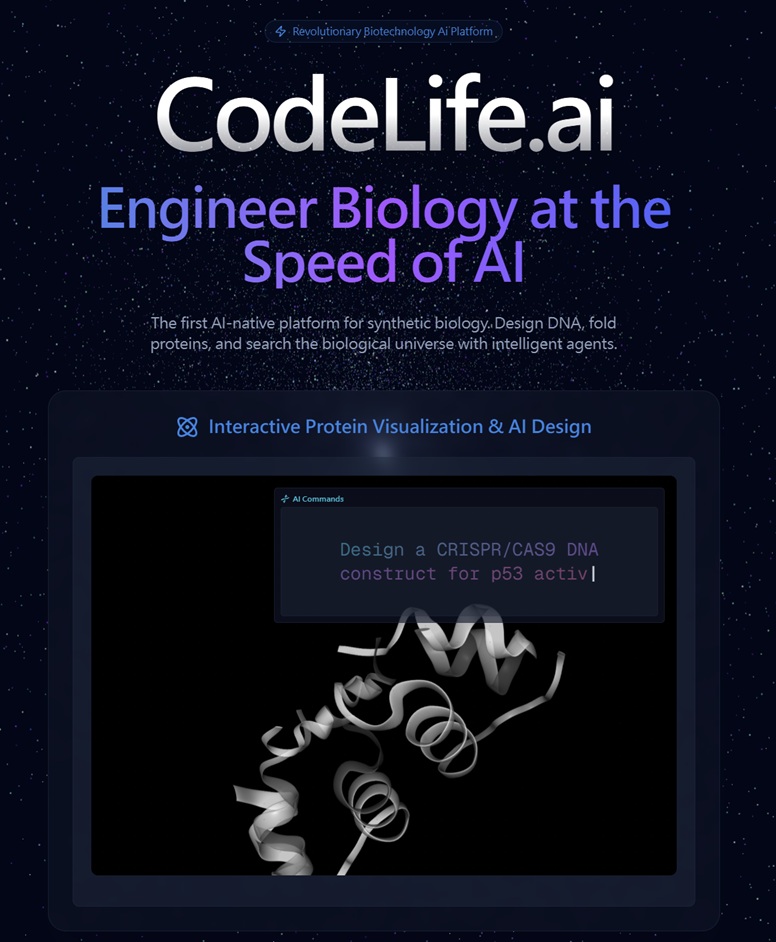
CodeLifeAI is an AI-powered biotechnology platform designed to make advanced life science research and education more accessible. It helps users design, analyse and optimise DNA, proteins, CRISPR experiments, AAV vectors and other biological systems. The
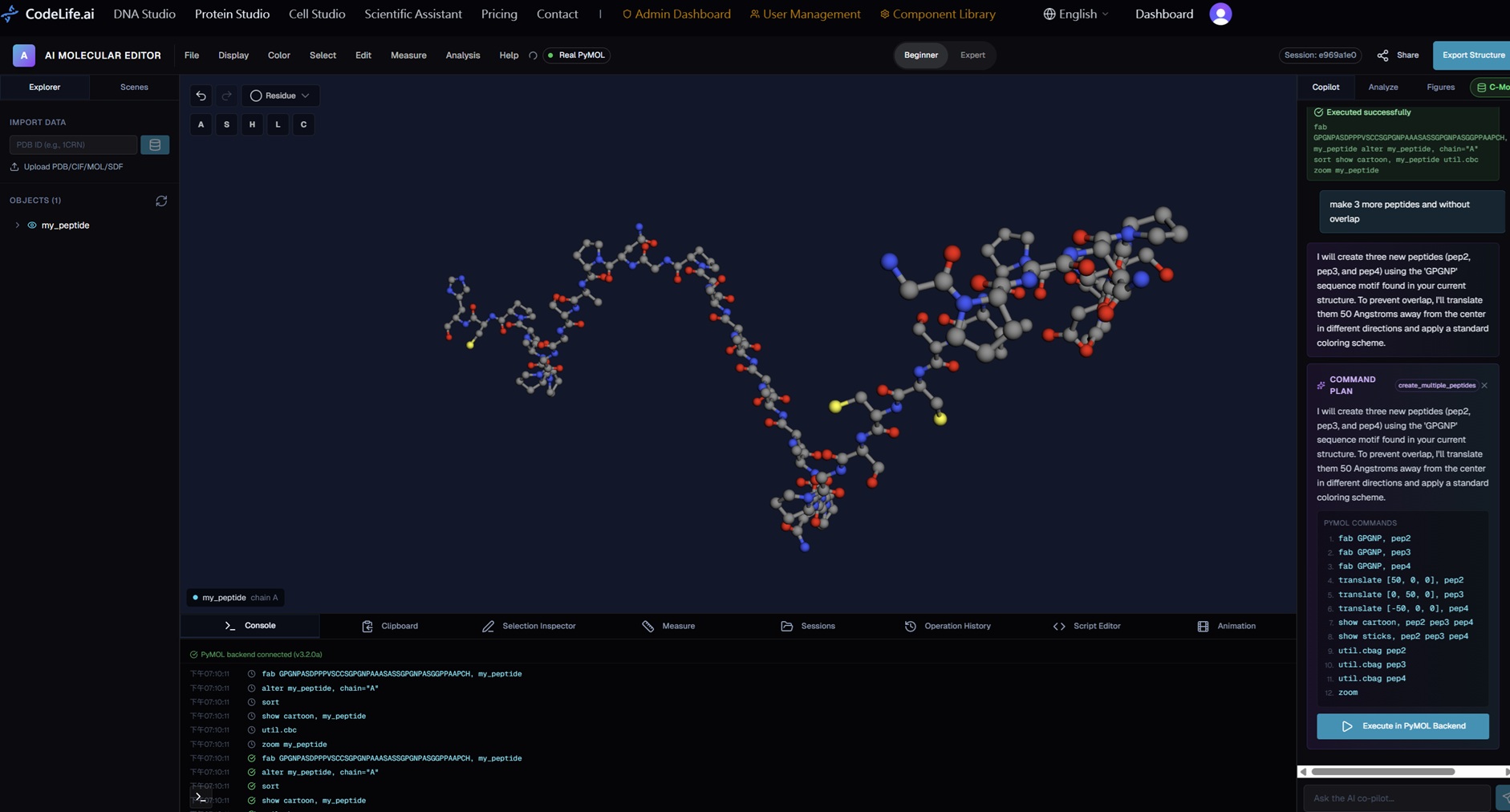
At the core of CodeLifeAI is an AI-assisted biological design environment that supports multiple life sciences workflows. These include DNA and protein design, CRISPR guide design, AAV-related biological engineering, biomolecular visualisation, biological

Dr. Kwong said Biotechnology is entering a new era in which artificial intelligence will become a central engine for discovery. CodeLifeAI was created to help scientists and students interact with biological systems more intuitively from DNA and protein design
Recognition highlights CodeLifeAI’s vision to accelerate biotechnology innovation through artificial intelligence, DNA design and protein engineering
HONG KONG, HONG KONG, May 14, 2026 /EINPresswire.com/ -- Dr. Keith Wai-Yeung Kwong, Hong Kong biomedical scientist and founder of CodeLifeAI, was honoured in the Life Sciences category at the “2025 Forbes China ESG Impact Enterprise Figures Summit and Awards Ceremony”, held on the evening of 28 April 2026. The recognition reflects Dr. Kwong’s long-standing commitment to life sciences innovation, translational biotechnology, and the development of artificial intelligence platforms that aim to make advanced biological design more accessible to scientists, educators and innovators worldwide.The Forbes China ESG Impact Enterprise Figures selection recognises enterprise leaders and innovators who integrate ESG values with technological development, business innovation and social impact. This year’s summit brought together influential figures from life sciences, artificial intelligence, robotics, low-altitude economy, new energy, carbon neutrality, women leadership, youth leadership and international business. The event highlighted how technology-driven entrepreneurship can contribute to a more sustainable and resilient future.
Dr. Kwong’s recognition comes at a time when artificial intelligence is rapidly transforming the life sciences industry. Through CodeLifeAI, he has been advancing a next-generation AI-powered biotechnology platform designed to support DNA design, protein engineering, CRISPR applications, AAV vector design, biological data interpretation and life sciences education. The platform aims to lower technical barriers for researchers and students, while accelerating the design-build-test cycle in biotechnology.
CodeLifeAI is built around the vision that the future of biotechnology will be increasingly computational, intelligent and accessible. Traditional biological research often requires long experimental cycles, costly trial-and-error workflows and deep specialist knowledge across multiple disciplines. By integrating artificial intelligence with molecular biology, synthetic biology and bioinformatics, CodeLifeAI seeks to help users design, analyse and optimise biological systems more efficiently.
At the core of CodeLifeAI is an AI-assisted biological design environment that supports multiple life sciences workflows. These include DNA and protein design, CRISPR guide design, AAV-related biological engineering, biomolecular visualisation, biological data management, educational content generation and AI-assisted experimental planning. The platform is designed to act not only as a software tool, but also as an intelligent co-pilot for scientists, educators and biotechnology teams.
One of CodeLifeAI’s key missions is to empower a broader scientific community. By providing AI-assisted tools for DNA sequence analysis, protein structure understanding, functional prediction and biomolecular design, the platform may help researchers explore new biological functions, improve molecular design efficiency, and accelerate innovation in fields such as synthetic biology, vaccines, therapeutics, cell engineering, regenerative medicine and precision health.
Dr. Kwong said, “Biotechnology is entering a new era in which artificial intelligence will become a central engine for discovery. CodeLifeAI was created to help scientists and students interact with biological systems more intuitively, from DNA and protein design to advanced molecular engineering. Our goal is to make powerful biological design capabilities more accessible, so that more innovators can contribute to future healthcare, sustainability and life sciences development.”
Beyond research applications, CodeLifeAI also places strong emphasis on biotechnology education. The platform is being developed to support students, schools and early-stage researchers in understanding complex biological concepts through interactive AI tools, visual learning modules and guided scientific workflows. By bridging education and advanced biotechnology, CodeLifeAI aims to cultivate the next generation of life sciences innovators.
The educational direction of CodeLifeAI is particularly aligned with Hong Kong and the Greater Bay Area’s growing emphasis on innovation and technology talent development. As biotechnology becomes increasingly data-driven and AI-enabled, future scientists will need to understand not only wet-lab techniques, but also computational biology, molecular design, automation and responsible innovation. CodeLifeAI seeks to provide an integrated learning and research environment that supports this transition.
During the Forbes China summit, Dr. Kwong was also invited to chair the Life Sciences Roundtable Forum, where he joined industry leaders from biotechnology, healthcare, pharmaceutical technology and AI-enabled health industries for in-depth discussions on the future of life sciences. Participants included Xu Wei, Chairman of Scinosen, and Hu Junyuan, Chairman of Shenzhen Beike Biotechnology Co., Ltd. The discussion covered biotechnology innovation, AI-enabled healthcare, precision medicine, biomanufacturing, medical technology integration and sustainable development in the health industry.
At the roundtable, Dr. Kwong shared his view that the future of life sciences will depend on the convergence of artificial intelligence, genetic engineering, protein design, cell technologies, 3D bioprinting and automated biomanufacturing. He noted that AI will help scientists identify disease mechanisms faster, design new therapeutic strategies, optimise biomolecules and accelerate preclinical research workflows, thereby enabling the health industry to become more precise, efficient and sustainable.
Dr. Kwong also exchanged views with Professor Lo Yuk Lam, widely regarded as the “Father of Biotechnology in Hong Kong”, and Professor Lam Man Kit on the development of biotechnology in Hong Kong and the Greater Bay Area. Their discussions explored Hong Kong’s strengths in scientific research, international connectivity, legal systems, intellectual property protection, talent development and capital markets, together with the Greater Bay Area’s advantages in industrial supply chains, manufacturing capabilities, clinical translation, application scenarios and market scale.
Hong Kong has a unique opportunity to become a leading international hub for AI-enabled biotechnology. With world-class universities, strong research talent, mature capital markets, robust intellectual property protection and close connectivity with mainland China and global markets, Hong Kong is well positioned to support the next wave of life sciences innovation. Combined with the industrial and manufacturing capabilities of the Greater Bay Area, the region can provide a powerful ecosystem for translating scientific ideas into real-world biotechnology products and solutions.
For CodeLifeAI, this environment presents significant opportunities. The platform is positioned at the intersection of artificial intelligence, life sciences education, molecular design and translational biotechnology. By connecting computational tools with biological insight, CodeLifeAI aims to support researchers, educators, students and biotech teams in moving faster from concept to experiment, and from experiment to application.
This Forbes China recognition not only acknowledges Dr. Kwong’s contributions to life sciences and biomedical innovation, but also reflects the growing importance of AI-powered biotechnology in ESG and sustainable development. As the world faces challenges such as ageing populations, chronic disease burden, public health threats, food and environmental pressures, and the need for more efficient healthcare solutions, biotechnology platforms that accelerate discovery and broaden access to scientific innovation will play an increasingly important role.
Looking ahead, Dr. Kwong and CodeLifeAI will continue to develop AI-driven biological design tools for DNA, protein, CRISPR, AAV and broader life sciences applications. The long-term vision is to build an intelligent biotechnology platform that enables scientists and students around the world to design, learn, experiment and innovate more efficiently — contributing to a healthier, more sustainable and more scientifically empowered future.
CodeLifeAI is an AI-powered biotechnology platform focused on biological design, life sciences education and intelligent research workflows. The platform supports areas including DNA design, protein engineering, CRISPR applications, AAV-related design, biomolecular visualisation, biological data interpretation and AI-assisted experimental planning. CodeLifeAI aims to make advanced biotechnology tools more accessible to researchers, educators, students and innovators, while accelerating the development of future life sciences applications.
Dr. Keith Wai-Yeung Kwong is a Hong Kong biomedical scientist and biotechnology innovator. His work spans oral vaccines, cell culture, biomanufacturing, 3D bioprinting, AI-driven biological design, DNA and protein engineering, and translational health technology. Through CodeLifeAI and related research initiatives, Dr. Kwong is committed to advancing the integration of artificial intelligence and biotechnology, and to supporting Hong Kong and the Greater Bay Area as an international hub for life sciences innovation.
Forbes
CodeLifeAi
email us here
Legal Disclaimer:
EIN Presswire provides this news content "as is" without warranty of any kind. We do not accept any responsibility or liability for the accuracy, content, images, videos, licenses, completeness, legality, or reliability of the information contained in this article. If you have any complaints or copyright issues related to this article, kindly contact the author above.
